
For the Sock Nerds: What Makes a Performance Sock Perform?

Most people don’t set out to become sock nerds. It just sort of happens.
It usually starts when you trade your everyday cotton socks for a pair made with performance yarns. If you are active, you notice the difference almost immediately. Your feet stay drier. The socks hold their shape. They don’t slide, bunch, or turn into heavy little sweat towels as the miles—or hours—add up.
As a gym rat, walker, and hiker, I don’t want to think about my socks while I’m moving. I want to focus on the workout, the trail, or simply enjoying the walk—not a slipping heel, damp fabric, or a toe seam that suddenly becomes the only thing I can think about.
That’s really the point of a good performance sock: it does its job so well that it doesn’t get in the way of what you’re doing.
Once you experience that kind of performance and comfort, it’s surprisingly hard to compromise... and then, congratulations—you’ve entered the first stage of becoming a sock nerd. You now know that not all socks are created equal.
Then comes the next level: wanting to know why. What yarns are being used? Where is the cushioning placed? How does the sock move moisture? Is the compression truly graduated, or is the sock just really tight? Why does one pair stay perfectly in place while another starts sliding before the warm-up is over?
I’ve learned that I now think about these things—and genuinely nerd out about them. Working closely with MudGear socks has shown me how much engineering can be packed into something most of us once considered a pretty basic piece of clothing. Every yarn, stitch, compression zone, ventilation channel, and reinforced area has a job to do.
So, for those who have already made the switch—and those ready to take their sock obsession to the next level—let’s look at what makes a MudGear performance sock work.

It Starts With the Yarn
Yarn is the foundation of a performance sock. Cotton may feel soft when it is dry, but it absorbs and holds moisture. Once it gets wet from sweat, rain, creek crossings, or mud, it becomes heavier, dries slowly, and sits against your skin. Add repeated movement and friction, and your feet may not be very happy with you.
Performance yarns are selected because they handle those conditions differently. They help move moisture, dry more quickly, stretch without losing their shape, and stand up to repeated wear. But there isn’t one magical yarn that does everything perfectly. The real trick is combining fibers so each one contributes something useful.
Across the MudGear collection, our performance blends use fibers such as:
- Nylon for strength, abrasion resistance, and durability.
- Polyester for moisture movement, faster drying, and shape retention.
- Spandex for stretch, support, and a fit that moves with you.
- Merino wool for temperature regulation, moisture management, softness, and natural odor resistance.
And yes, those percentages on the label actually mean something. A sock built for a hot marathon should not necessarily use the same yarn blend—or the same amount of cushioning—as one designed for miles under a loaded ruck.
Merino Is Not Just for Winter
Merino wool deserves its own section because it is often misunderstood. Some people hear “wool sock” and picture something thick, scratchy, and reserved for freezing temperatures. Performance merino is a very different animal. Technically, it comes from the same animal, but you know what we mean.
Merino fibers help regulate temperature, manage moisture, and resist odor. That makes merino useful well beyond cold-weather hiking. It can add comfort during temperature swings, long days on the trail, travel, rucking, or any situation in which changing socks every few hours is not especially convenient.
MudGear uses merino as part of a performance blend rather than asking it to do every job on its own. In styles such as our Ruck Socks and Merino Quarter Crew Socks, it works alongside synthetic fibers that add stretch, stability, durability, and faster moisture movement. In some constructions, merino is placed strategically in high-friction or high-impact areas where its comfort and moisture-managing qualities matter most.
That is a recurring theme in good sock design: put the right material in the right place.
Fit Is Part of Blister Prevention
When people think about blisters, moisture usually gets most of the blame. It is an important part of the equation, but movement matters too.
If a sock slides, wrinkles, or bunches inside your shoe, it creates more opportunities for repeated friction against the skin. A well-engineered fit helps the sock and foot move together instead.
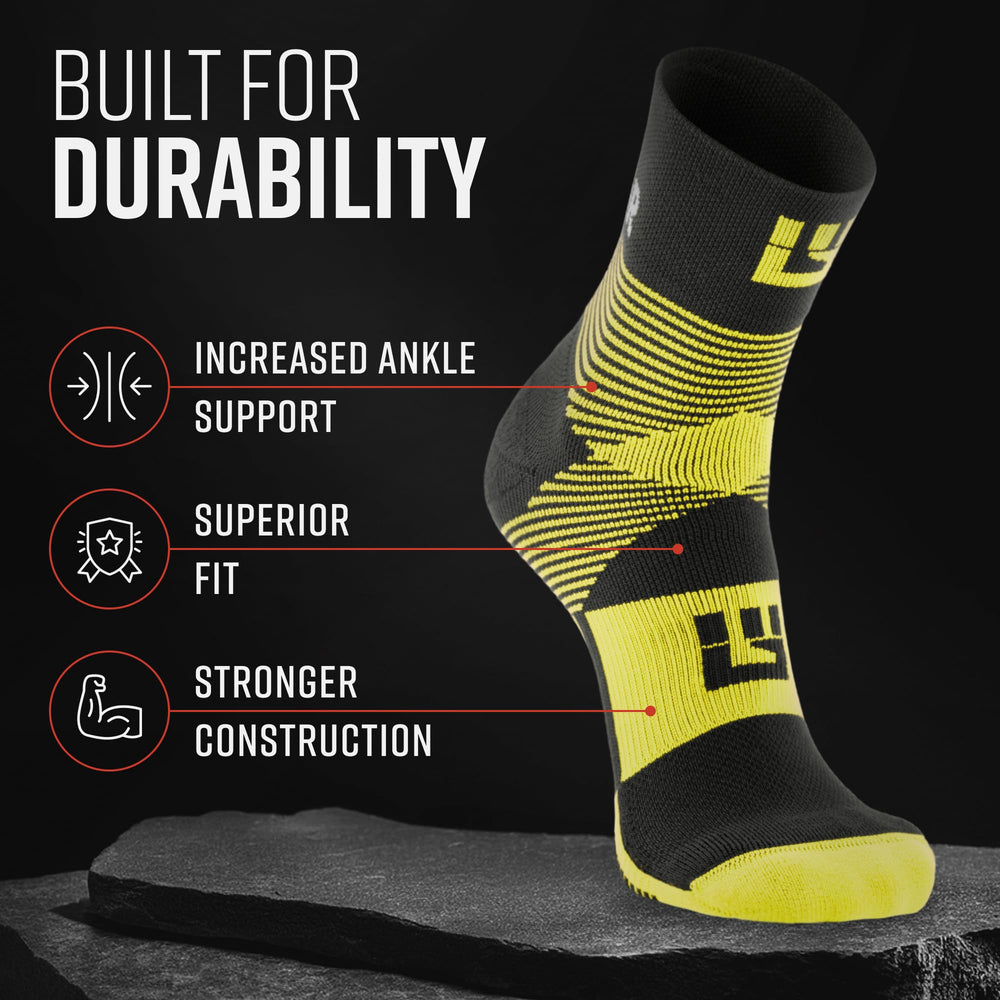
That is why features such as a formed heel pocket, snug arch support, stretch through the midfoot, and a secure cuff matter. They are not there just to make the sock look technical. They help hold it where it belongs.
Take the MudGear Ruck Sock as an example. Its form-fitting arch uses a nylon-and-spandex construction to add stretch and stability between the heel and toe. Under the added weight and repetitive movement of a ruck, keeping the sock stable can make a meaningful difference in comfort.
The goal is a fit that feels secure without becoming a distraction. You should notice that the sock stays put—not spend the entire workout noticing how tightly it is squeezing you.
Cushioning: More Is Not Always Better
It is easy to assume that the thickest sock will be the most comfortable. Sometimes extra cushioning is useful, but more material is not automatically better.
Too much cushioning can change how a shoe fits, trap additional heat, absorb more water, and reduce the ground feel some runners and athletes prefer. Too little can leave high-impact areas under-protected. Good cushioning is less about maximum thickness and more about placement and purpose.
MudGear socks use different cushioning strategies for different activities, for example:
- Ruck Socks add protection in the footbed and heel for boots, added weight, and long loaded miles.
- Hiking and Trail Socks balance cushioning with airflow and the ability to shed water and mud.
- UltraLight Marathon Socks use minimal cushioning and strategic padding to reduce bulk, improve breathability, and provide more direct feedback from the road or trail.
In other words, a plush sock is not necessarily a better sock. The better sock is the one built for what you are asking it to do.
Moisture Management Takes a Team
“Moisture-wicking” gets printed on so many product labels that it can start to feel meaningless. In reality, for socks, moisture management is not one feature. It is the result of several design choices working together.
Those choices can include:
- Fibers that move moisture away from the skin.
- Mesh zones that improve airflow.
- Knit channels that help move moisture through the sock.
- Cushioning that does not soak up and hold unnecessary water.
- A close fit that allows the fibers to do their job.
- Construction that drains and dries more quickly after getting wet.
No sock can stop your feet from sweating. That would be impressive—and possibly concerning! A performance sock’s job is to manage that moisture, promote airflow, and reduce the amount of wet fabric sitting against your skin.
This is especially important during long efforts, hot-weather training, trail races, and OCR events. A little dampness at the start can become a much bigger issue after hours of repeated movement.
Small Details Get Bigger With Every Mile
A toe seam that feels slightly annoying when you first put on a sock can become the main character of your entire day by mile 20.
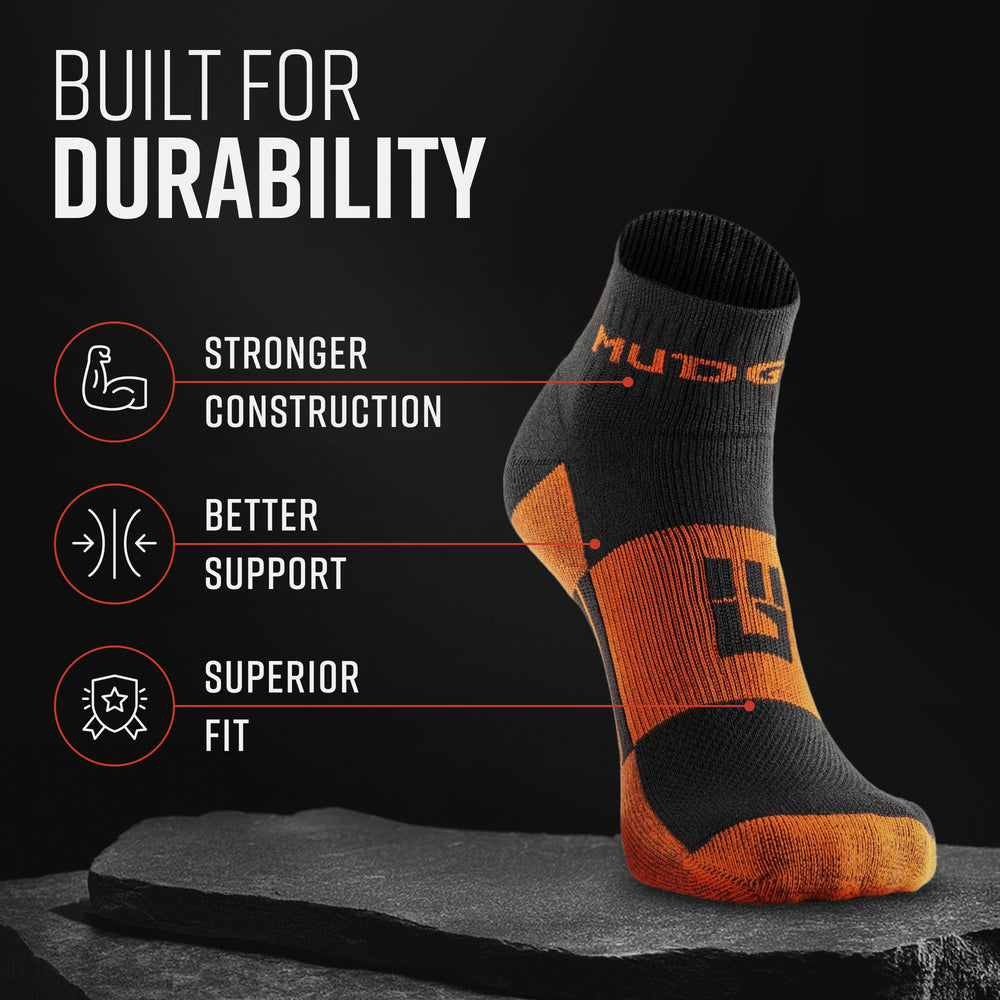
That is why small construction details matter. All our MudGear styles use seamless or low-profile toe construction to create a smoother interior and reduce potential irritation around the toes. Strategic ventilation, correctly positioned cushioning, and a heel pocket that sits where it should may not seem dramatic when you are standing in your kitchen. Their value becomes clearer after several hours of running, hiking, rucking, working, or traveling.
This is one of the best ways to judge a performance sock: not by how impressive it feels for the first five minutes, but by how little you have to think about it five hours later.
Reinforcement Where Socks Work the Hardest
Heels and toes tend to wear out first for a reason. They deal with constant shoe contact, pressure, friction, and repeated movement. Descents drive the toes forward. Climbs and loaded movement challenge the heel. Daily wear adds up quickly.
Reinforcing these high-wear areas adds durability without making the entire sock unnecessarily thick or heavy. You get extra protection where it is needed while preserving breathability and flexibility elsewhere.
That targeted approach helps MudGear socks handle demanding use without feeling like protective equipment for your feet. Tough is good. Tough and comfortable is better.
Compression Should Be More Than “Really Tight”
Compression is another area where the details matter.
MudGear Tall Compression Socks provide true 15–20 mmHg graduated compression. “Graduated” means the pressure is strongest near the ankle and gradually decreases as it moves up the leg. That construction is designed to support circulation, help manage swelling and fatigue, and provide lower-leg support during activity and recovery.
But the mmHg number does not tell the whole story. Yarn quality, stretch, construction, sizing, and how well a sock maintains its shape all affect how that compression feels and performs.
A higher number is not automatically better, especially for an athletic sock that may be worn for hours. The goal is effective support that stays comfortable, remains in place, and moves with you—not a contest to see how difficult a sock can be to pull over your calf.
Sock Height Has a Job Too
Height may look like a style choice, but it also changes how a sock performs.
- No-show socks provide minimal coverage and work well for training, running, and everyday use. A properly designed heel tab can also help protect the back of the foot from shoe friction.
- Quarter Crew socks rise above the ankle to provide more coverage and help keep out dirt, rocks, and trail debris without extending up the calf.
- Crew and boot-height socks add protection inside boots and across more of the lower leg, making them well suited for rucking, hiking, work, and OCR.
- Tall Compression Socks extend below the knee to provide graduated lower-leg support along with protection from brush, mud, ropes, and obstacles.
There is no universally perfect sock height. There is only the right height for your shoes, your activity, and how much support or protection you want.

Different Socks for Different Jobs
Once you reach the advanced stage of sock nerd-dom, you stop asking, “What is the best sock?” and start asking, “What is the best sock for this activity?”
That may mean reaching for:
- Tall Compression Socks for lower-leg support, endurance events, OCR, long workdays, travel, or recovery.
- Tall Compression Merino Socks when you want compression with the added temperature and moisture-management benefits of merino.
- Mesa Horizon Tall Compression Socks for hiking and trail miles that combine graduated compression, merino comfort, and reinforced durability.
- UltraLight Marathon Socks for distance running, hot conditions, minimal cushioning, and maximum breathability.
- Ruck Socks for boots, loaded movement, abrasion resistance, and long miles under weight.
- Quarter Crew Trail Socks for versatile trail protection, drainage, and debris coverage.
- Quarter Crew Merino Socks for the familiar trail fit with strategically placed merino comfort.
Your footwear matters too. The perfect sock still needs to work with the fit and volume of your shoe or boot. Sock, shoe, foot, and activity are all part of the same system—even if “footwear system” sounds like we may have taken this sock nerd thing slightly too far.
The Best Features Are the Ones You Forget About
Sock nerds may notice the yarn blend, compression profile, mesh zones, heel pocket, and cushioning strategy. Everyone else notices something simpler: the sock stayed in place, their feet remained comfortable, and nothing distracted them from the miles ahead.
That is the real purpose behind all this engineering. It is not to make a basic product sound complicated. It is to solve the little problems that can become big problems when you are training, racing, hiking, rucking, working, or simply spending a long day on your feet.
Once you feel that difference, it is hard to go back. And if you catch yourself reading the fiber percentages on a sock label or discussing the merits of targeted cushioning, don’t worry. You are among friends now.
Made Tougher,
Bootleg
Ready to find the right sock for your miles? Explore the full MudGear sock collection.





Leave a comment